First-time polyhouse farmers often lose money to avoidable errors. Here are the 10 most common mistakes in polyhouse farming and practical ways to prevent them. Focus Keyword: polyhouse farming mistakes Secondary Keywords: polyhouse setup errors, first time polyhouse farmer, polyhouse farming India, protected cultivation mistakes

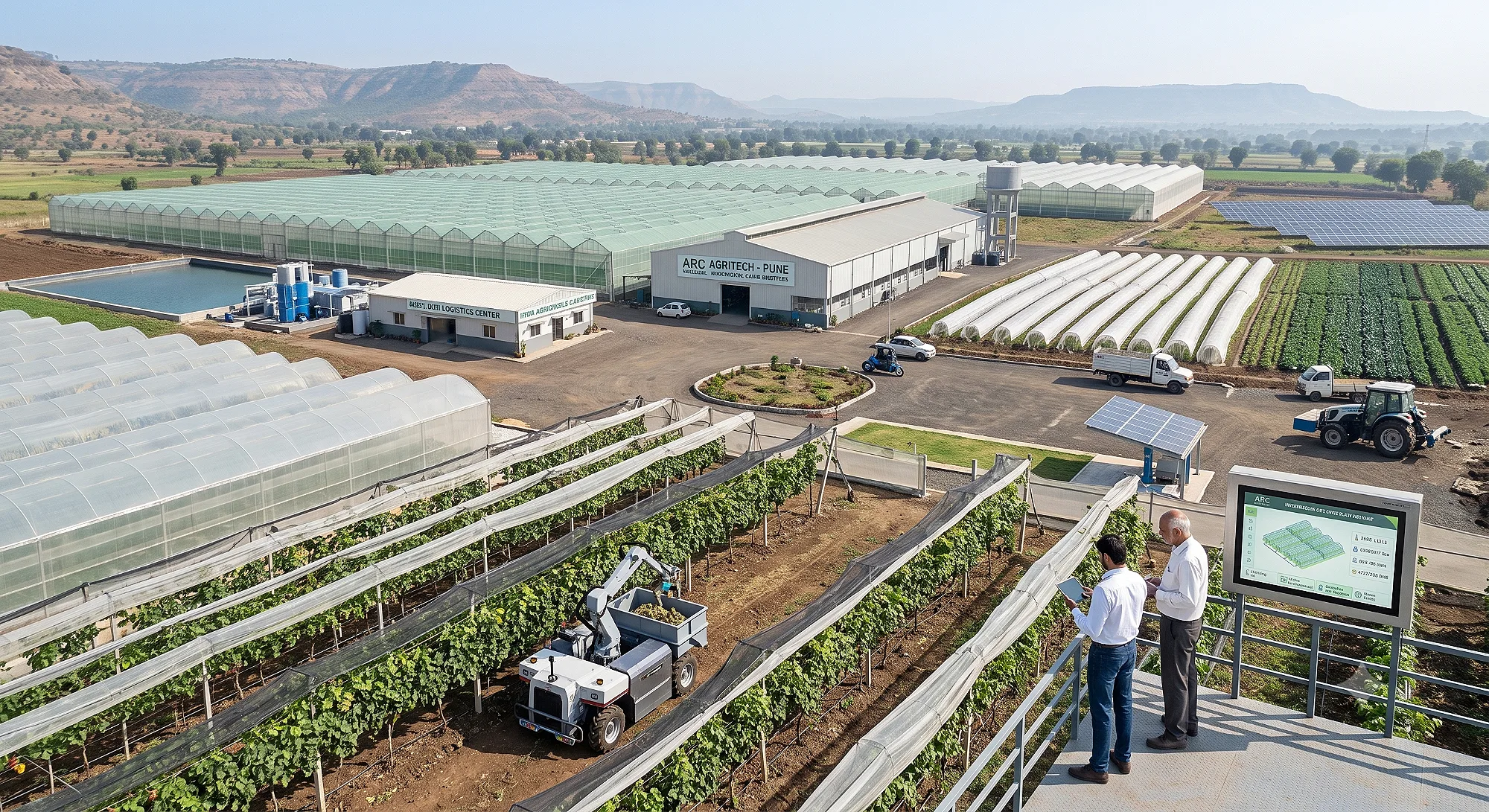
Polyhouse farming can improve yield consistency and open access to premium markets for high-value crops like capsicum, cucumber, and strawberry. But the shift from open-field farming to a controlled-environment structure is a technical undertaking, not just a construction project. Many first-time growers lose time and money not because polyhouse farming doesn’t work, but because of a handful of avoidable mistakes made before the first seed is even sown.
Below are the ten mistakes that show up most often among new polyhouse farmers in India, along with what to do instead.
1. Skipping Soil and Water Testing Before Construction
A polyhouse controls temperature, humidity, and light — but it cannot fix poor soil chemistry or contaminated water on its own. Farmers who skip a soil and water test before construction often discover nutrient imbalances, high salinity, or poor drainage only after the crop is already struggling. A basic lab test costs a fraction of what a failed first crop cycle costs, and it should always come before structure design, not after.
2. Choosing the Wrong Structure Type for the Crop and Region
Not every polyhouse design suits every crop or climate. A structure built for capsicum in a cooler hill region will not perform the same way in a hot, humid plain. Ventilation type, roof shape, and cladding material all need to match local weather patterns and the specific crop’s temperature and humidity tolerance. Farmers who copy a neighbour’s design without adjusting for their own soil, wind exposure, or climate zone often end up with heat stress or excess humidity issues inside the structure.
3. Underestimating Irrigation and Fertigation Requirements
Protected cultivation crops are usually grown at higher density and require more precise water and nutrient scheduling than open-field crops. A basic sprinkler system is rarely sufficient. Drip irrigation paired with a fertigation setup allows nutrients to be delivered in the right quantity at the right growth stage. Farmers who treat irrigation as an afterthought, rather than a core part of the design, frequently see uneven plant growth and lower fruit quality.
4. Ignoring Ventilation and Climate Control Needs
Heat build-up inside a polyhouse is one of the most common reasons for crop stress. Ventilation — whether through roof vents, side curtains, or exhaust fans — needs to be planned based on local temperature ranges, not installed as a standard fixture. Inadequate ventilation leads to excess humidity, which increases the risk of fungal disease, especially in tomato and cucumber crops.
5. Overlooking Pest and Disease Management Planning
A controlled environment reduces exposure to many outdoor pests, but it does not eliminate the risk. Whitefly, thrips, and fungal infections can spread quickly inside a closed structure if insect nets, entry protocols, and monitoring schedules aren’t in place from day one. Farmers who assume the polyhouse itself is a complete pest barrier often face larger outbreaks than they would in open fields, simply because problems go unnoticed longer in an enclosed space.
6. Selecting Crop Varieties Without Market Research
Choosing what to grow based on what performs well in a polyhouse — without checking local demand, mandi prices, or buyer contracts — is a common early mistake. Capsicum, cherry tomato, and strawberry all have strong potential in protected cultivation, but returns depend heavily on where and how the produce will be sold. Farmers who plan crop selection and market linkage together, rather than sequentially, tend to see more stable pricing.
7. Underbudgeting for Ongoing Operational Costs
The upfront cost of polyhouse construction is only part of the investment. Ongoing expenses — labour, fertigation inputs, pest control, cladding replacement, and electricity for climate control — need to be factored into the budget from the start. Farmers who calculate only the setup cost, without projecting two to three years of operating expenses, often face cash flow pressure during the early growth phase, before consistent returns begin.
8. Missing Out on Government Subsidy Support
Several state and central government schemes offer subsidy support for polyhouse and greenhouse construction, but the application process requires specific documentation and timing. Farmers who begin construction before checking subsidy eligibility sometimes miss the window for claiming support, since many schemes require approval before work begins, not after. Reviewing subsidy requirements early — rather than treating it as a later formality — can materially change the total cost of the project.
9. Inadequate Training on Day-to-Day Management
A polyhouse requires different daily practices than open-field farming: monitoring temperature and humidity, adjusting ventilation, tracking fertigation schedules, and identifying early signs of disease. Farmers who move into protected cultivation without proper training on these routines often make reactive decisions instead of preventive ones. Structured training during the setup phase — not just at installation — reduces the learning curve significantly.
10. Not Planning for Post-Harvest Handling and Market Linkage
Producing a high-quality crop inside a polyhouse doesn’t guarantee a good price if post-harvest handling and market access aren’t planned in advance. Grading, packaging, cold storage, and buyer relationships all affect the final realisation. Farmers who treat market linkage as a separate, later step — instead of part of the original farm plan — often end up selling at lower rates through unplanned, last-minute channels.
Frequently Asked Questions
What is the most common mistake in polyhouse farming? Skipping soil and water testing before construction is one of the most frequent and costly mistakes, since it affects every stage of crop growth afterward.
Can a polyhouse fail even with a good structure? Yes. Structure quality matters, but irrigation planning, ventilation, pest management, and market linkage are equally important to a polyhouse project’s success.
Is subsidy available for polyhouse farming in India? Yes, subsidy support is available through various state and central schemes, though eligibility and application timing vary by state and scheme.
How can first-time farmers reduce risk in polyhouse farming? Planning soil testing, crop selection, irrigation design, budgeting, and market linkage together — before construction begins — reduces most of the common risks first-time growers face.
Closing Thought
Most polyhouse farming setbacks are not due to the technology itself, but to decisions made — or skipped — before construction starts. Farmers who invest time in planning soil health, structure design, irrigation, budgeting, and market linkage upfront are far better positioned for a successful first crop cycle than those who treat the polyhouse as a one-time construction project.