A practical guide to government subsidy schemes for polyhouse farming in India — eligibility, documentation, application process, and common mistakes to avoid. Focus Keyword: government subsidy for polyhouse farming Secondary Keywords: polyhouse subsidy India, greenhouse subsidy scheme, NHM polyhouse subsidy, polyhouse farming government scheme

Setting up a polyhouse is a significant investment, and cost is often the biggest barrier for farmers considering the shift to protected cultivation. To encourage adoption, the Indian government offers subsidy support for polyhouse and greenhouse construction through central and state-level schemes. Understanding how these subsidies work — and applying at the right stage — can substantially reduce the overall investment required.
This guide walks through what subsidy support typically covers, who is eligible, how the application process generally works, and what to watch out for.
Why the Government Subsidises Polyhouse Farming
Protected cultivation supports several national agricultural priorities: higher productivity per acre, reduced dependency on weather, better water-use efficiency through drip irrigation, and increased farmer income through high-value crops. Because polyhouse structures require a meaningful upfront investment, subsidy schemes exist to lower the entry barrier, particularly for small and marginal farmers.
Key Schemes That Support Polyhouse Subsidy
Subsidy support for polyhouse and greenhouse projects in India generally comes through a few main channels:
National Horticulture Mission (NHM) Operated under the Ministry of Agriculture and Farmers Welfare, NHM provides financial assistance for protected cultivation structures, including polyhouses, shade net houses, and green houses, as part of its broader horticulture development mandate.
Mission for Integrated Development of Horticulture (MIDH) MIDH consolidates several horticulture-related schemes, including support for protected cultivation infrastructure, and is implemented through state horticulture departments.
State-Specific Horticulture Schemes Many states run their own subsidy programs on top of central schemes, sometimes offering additional financial assistance for polyhouse construction, drip irrigation, and post-harvest infrastructure. Subsidy percentages, caps, and eligible structure sizes vary by state, so farmers need to check with their state horticulture department for current terms.
Because scheme names, subsidy percentages, and eligibility criteria are revised periodically, farmers should verify current details directly with their state horticulture department or through the NHM/MIDH official portals before beginning the application process.
Who Is Typically Eligible
While exact eligibility criteria vary by scheme and state, most polyhouse subsidy programs share some common requirements:
- The applicant should be an individual farmer, farmer producer organisation (FPO), or registered agricultural entity.
- Land ownership or a valid long-term lease document is usually required.
- The proposed polyhouse area typically needs to fall within minimum and maximum size limits set by the scheme.
- Some schemes prioritise small and marginal farmers, or specific categories such as women farmers or SC/ST applicants, with higher subsidy percentages.
Because criteria differ by state and scheme, farmers should confirm exact eligibility rules with their local horticulture department before assuming they qualify.
Documents Generally Required
A typical polyhouse subsidy application asks for a combination of the following documents. Exact requirements vary by state, so this should be treated as a general checklist rather than a final list:
- Land ownership or lease documents
- Aadhaar card and other identity proof
- Bank account details for direct benefit transfer (DBT)
- Land survey and soil test report (in some states)
- Detailed project report or cost estimate for the proposed structure
- Passport-size photographs
- Caste certificate, if applying under a category-specific subsidy slab
How the Application Process Generally Works
While the exact process differs by state, most polyhouse subsidy applications follow a similar sequence:
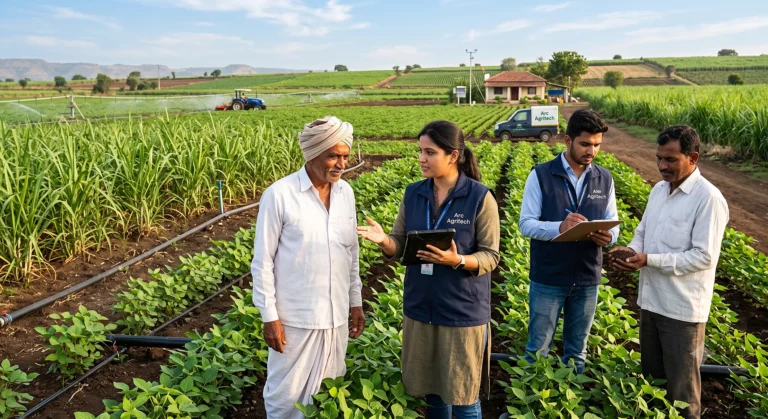
Step 1: Pre-Application Consultation Before applying, it helps to consult the state horticulture department or an experienced polyhouse service provider to understand which scheme fits the project size and crop plan.
Step 2: Submit Application Before Construction Begins This is one of the most important — and most commonly missed — requirements. Most subsidy schemes require approval before construction starts. Farmers who build first and apply later often find they are no longer eligible, since the subsidy is meant to fund new construction, not reimburse completed work.
Step 3: Site Verification After submission, a designated official typically visits the site to verify land details and assess project feasibility before approval is granted.
Step 4: Approval and Construction Once approved, construction can proceed according to the specifications outlined in the sanctioned project report.
Step 5: Post-Construction Verification After construction is completed, another verification is usually conducted to confirm the structure matches the approved plan before the subsidy amount is released.
Step 6: Subsidy Disbursement Subsidy funds are generally transferred directly to the farmer’s bank account under the Direct Benefit Transfer (DBT) system, once all verifications are complete.
Common Mistakes That Delay or Disqualify Applications
- Starting construction before approval. This is the single most common reason applications are rejected.
- Incomplete or mismatched documentation, particularly land ownership records that don’t match the applicant’s name.
- Applying for a structure size outside the scheme’s eligible range.
- Missing the application window for a particular financial year’s scheme cycle.
- Not accounting for processing time, which can take several weeks depending on the state and season.
How Much Subsidy Can Farmers Expect?
Subsidy percentages vary significantly by state, scheme, farmer category, and structure size, and are subject to periodic revision. Rather than relying on a fixed number, farmers should request current subsidy rates directly from their state horticulture department or an authorised polyhouse service provider at the time of application, since outdated figures can lead to incorrect budgeting.
Frequently Asked Questions
Can I apply for a polyhouse subsidy after construction is already complete? In most cases, no. The majority of schemes require approval before construction begins, since the subsidy is designed to support new projects, not reimburse completed ones.
Which department handles polyhouse subsidy applications? Applications are generally processed through the state horticulture department, often in coordination with schemes under NHM or MIDH at the central level.
Do subsidy rates differ by state? Yes. Subsidy percentages, structure size limits, and eligibility criteria vary from state to state and are revised periodically.
How long does subsidy approval typically take? Processing time varies by state and season, but it generally spans several weeks between application submission and final approval, so this should be factored into project timelines.
Closing Thought
Government subsidy support can meaningfully reduce the cost of setting up a polyhouse, but only when the application is filed correctly and at the right stage — before construction begins. Farmers who research current scheme details with their state horticulture department early, and prepare documentation in advance, are far more likely to receive subsidy support without delays.